

Denim Fashion by Decade|年代別デニムジーンズの流行ファッション
ジーンズは、作業着として生まれ、映画、音楽、若者文化、ストリート、ヴィンテージブームを通して、時代ごとの着こなしを作ってきました。この記事では、1870年代から2020年代までのデニムファッションを年代別に整理します。
Jeans began as workwear and became part of cinema, music, youth culture, street style, vintage fashion, and modern slow clothing. This guide explains denim fashion by decade, from the 1870s to the 2020s.
海外の方にも伝わりやすいように、workwear jeans、western denim、rebel style、skins fashion、bell-bottom jeans、acid wash denim、baggy jeans、Y2K low-rise jeans、raw denim、wide-leg jeans、Japanese denim boom などの英語キーワードもあわせて紹介します。
For international readers and search engines, we also include key terms such as workwear jeans, western denim, rebel style, skins fashion, bell-bottom jeans, acid wash denim, baggy jeans, Y2K low-rise jeans, raw denim, wide-leg jeans, and the Japanese denim boom.
まずは年代別の流れ
A Quick Timeline of Denim Fashion
-
1870s-1900s / Workwear Jeans
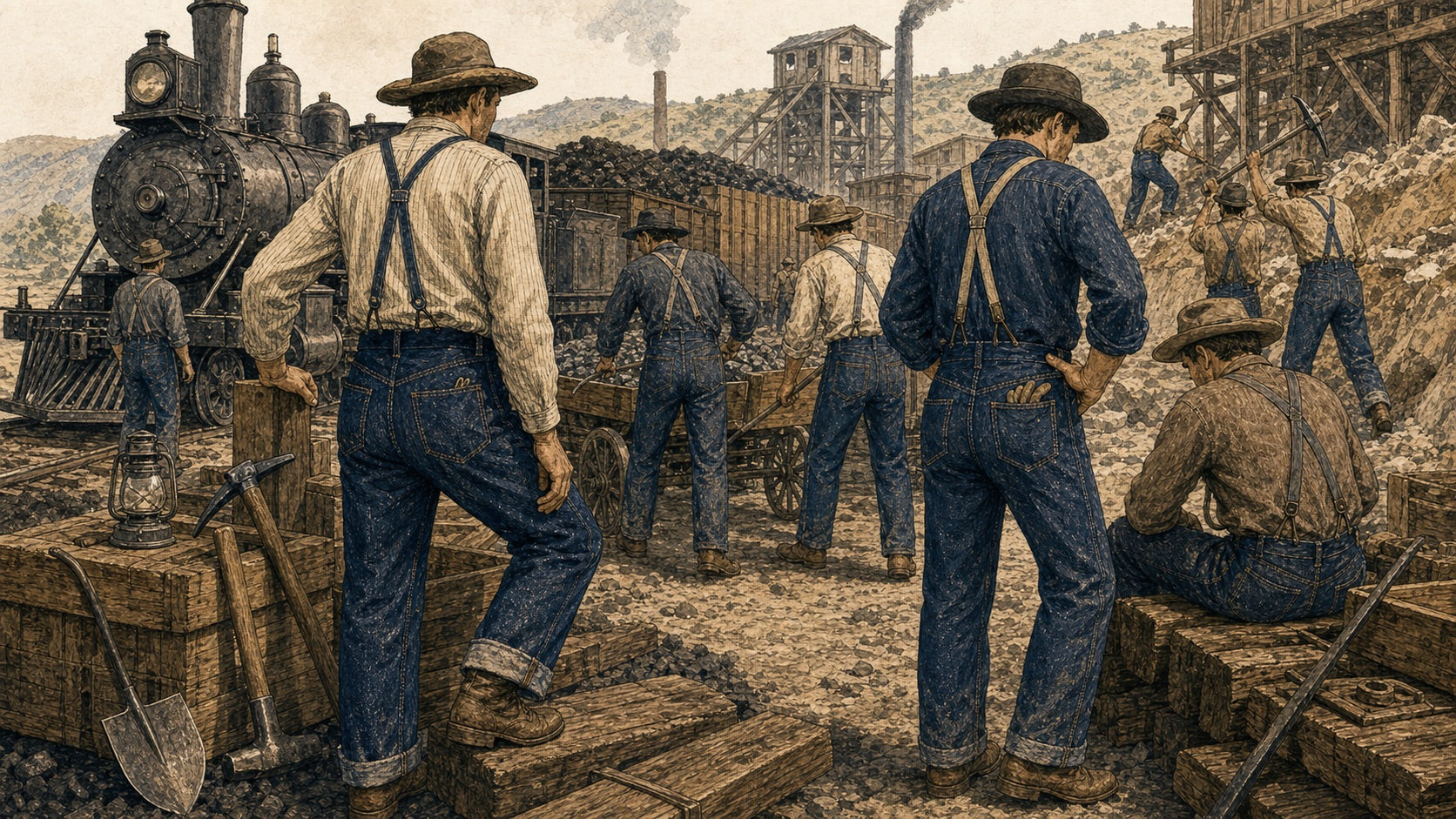
鉱山、鉄道、農場、工場などで働く人のための丈夫な作業着。太めのストレート、サスペンダー、ブーツと合わせる実用的な着こなしが中心でした。
Durable jeans for miners, railroad workers, farmers, and factory workers. Straight work pants, suspenders, and boots were practical rather than fashionable. -
1930s / Western Denim
西部劇、牧場、dude ranch culture の影響で、ジーンズはアメリカらしさや休日のカジュアルウェアとしても見られるようになります。
Western films and dude ranch culture helped denim move from workwear into casual clothing associated with the American West. -
1950s / Rebel Style
白Tシャツ、レザージャケット、ロールアップしたストレートジーンズ。James Dean や Marlon Brando の時代の映画イメージが、ジーンズを若者の反抗的な服にしました。
White T-shirts, leather jackets, cuffed straight jeans. The James Dean and Marlon Brando era helped make jeans a symbol of youth rebellion. -
1960s-1970s / Counterculture, Skins & Flares
ヒッピーの刺繍やパッチワーク、スキンズの細身ストレートとブーツ、1970年代のベルボトムやデニムオンデニムなど、デニムがサブカルチャーごとの制服になります。
Hippie embroidery and patchwork, skins style with slim jeans and boots, and 1970s bell-bottoms turned denim into a uniform for different subcultures. -
1980s-2000s / Designer, Baggy & Y2K Denim
デザイナージーンズ、ケミカルウォッシュ、バギージーンズ、ローライズ、ブーツカットなど、広告、音楽、ストリート、ポップカルチャーと強く結びつきます。
Designer jeans, acid wash, baggy jeans, low-rise jeans, and bootcut denim became closely tied to advertising, music, street style, and pop culture. -
2010s-2020s / Raw Denim, Vintage & Wide-Leg Jeans
スキニージーンズ、ローデニム、セルビッチ、古着、ワイドシルエット、修理しながら長く穿く価値観へ。日本製デニムの人気も世界的に広がりました。
Skinny jeans, raw denim, selvedge, vintage style, wide silhouettes, repair culture, and long-term wear became important. Japanese denim also gained global attention.
1870s-1900s: 作業着としてのジーンズ
1870s-1900s: Jeans as Workwear
1873年、ヤコブ・デイヴィスとリーバイ・ストラウスが、負荷のかかる部分をリベットで補強したワークパンツの特許を取得しました。この時代のジーンズは、ファッションというより「長く使える道具」に近い存在です。
In 1873, Jacob Davis and Levi Strauss received a patent for work pants reinforced with rivets at stress points. In this era, jeans were closer to durable tools than fashion items.
鉱山、鉄道、農場、工場で働く人たちは、破れにくく、動きやすく、汚れが目立ちにくい服を求めました。太めのストレートシルエット、ブーツ、シャツ、サスペンダーという組み合わせは、見た目よりも実用性から生まれたスタイルでした。
Miners, railroad workers, farmers, and factory workers needed clothing that resisted wear, moved easily, and hid dirt. Straight silhouettes, boots, shirts, and suspenders came from utility before style.
1930s: 西部劇と牧場スタイル
1930s: Western Denim and Ranch Style
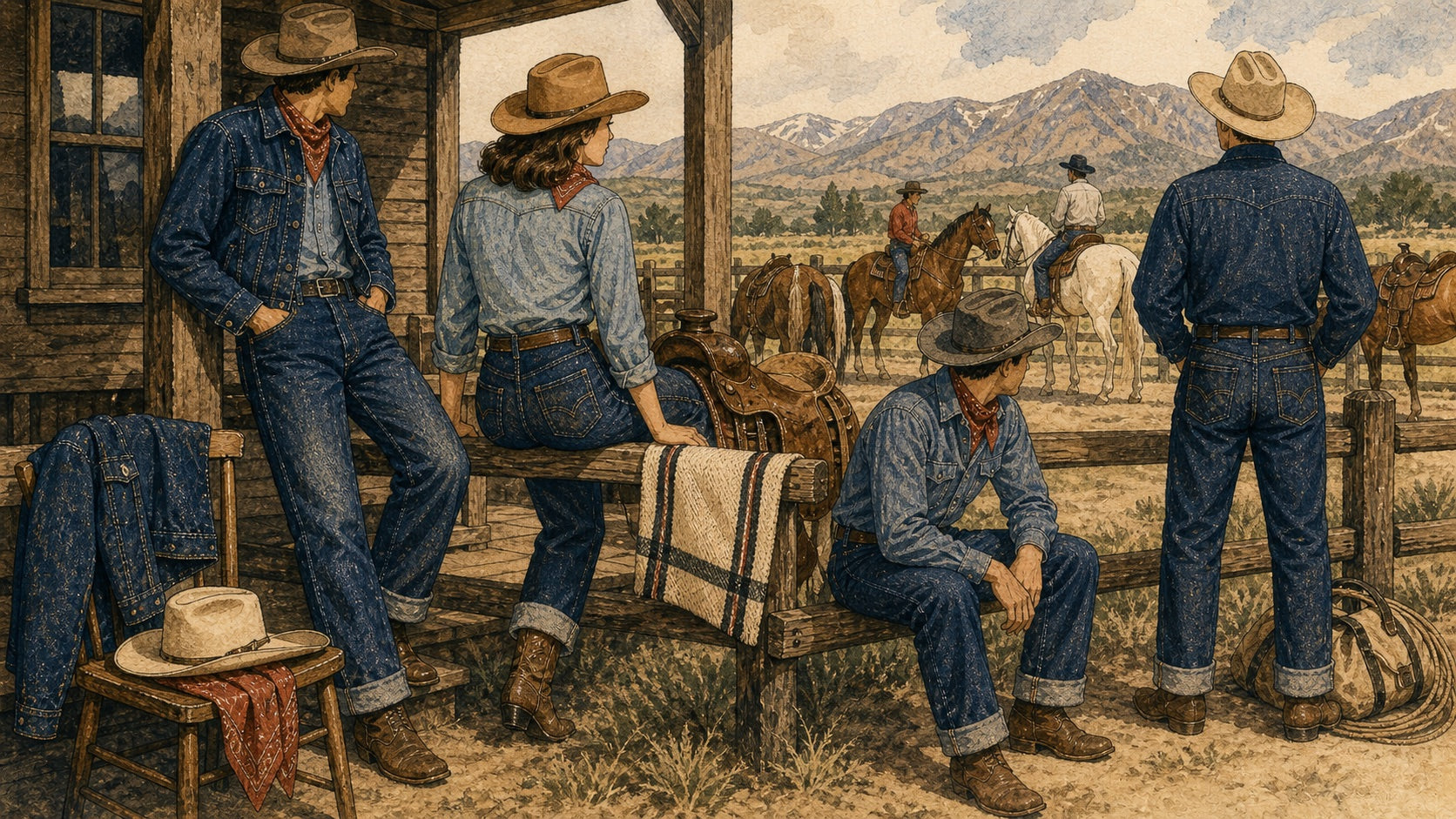
1930年代になると、ジーンズは作業現場だけでなく、西部劇や牧場体験のイメージとも結びつきます。アメリカ西部の雰囲気、カウボーイ、デニムジャケット、カフを折ったジーンズは、海外から見ても「アメリカらしい服」として認識されていきました。
By the 1930s, jeans were connected not only with labor but also with western films and ranch imagery. Cowboys, denim jackets, cuffed jeans, and western boots helped denim look like a symbol of American casual culture.
この時期のデニムは、まだ洗練されたファッションというより、丈夫で素朴なカジュアルウェアです。しかし「作業着を日常着として着る」という感覚が、のちのデニムファッションの土台になりました。
Denim in this period was still rugged and simple rather than polished fashion. But the idea of wearing workwear as everyday clothing became a foundation for later denim style.
1950s: 若者、映画、反抗のジーンズ
1950s: Youth, Cinema, and Rebel Jeans
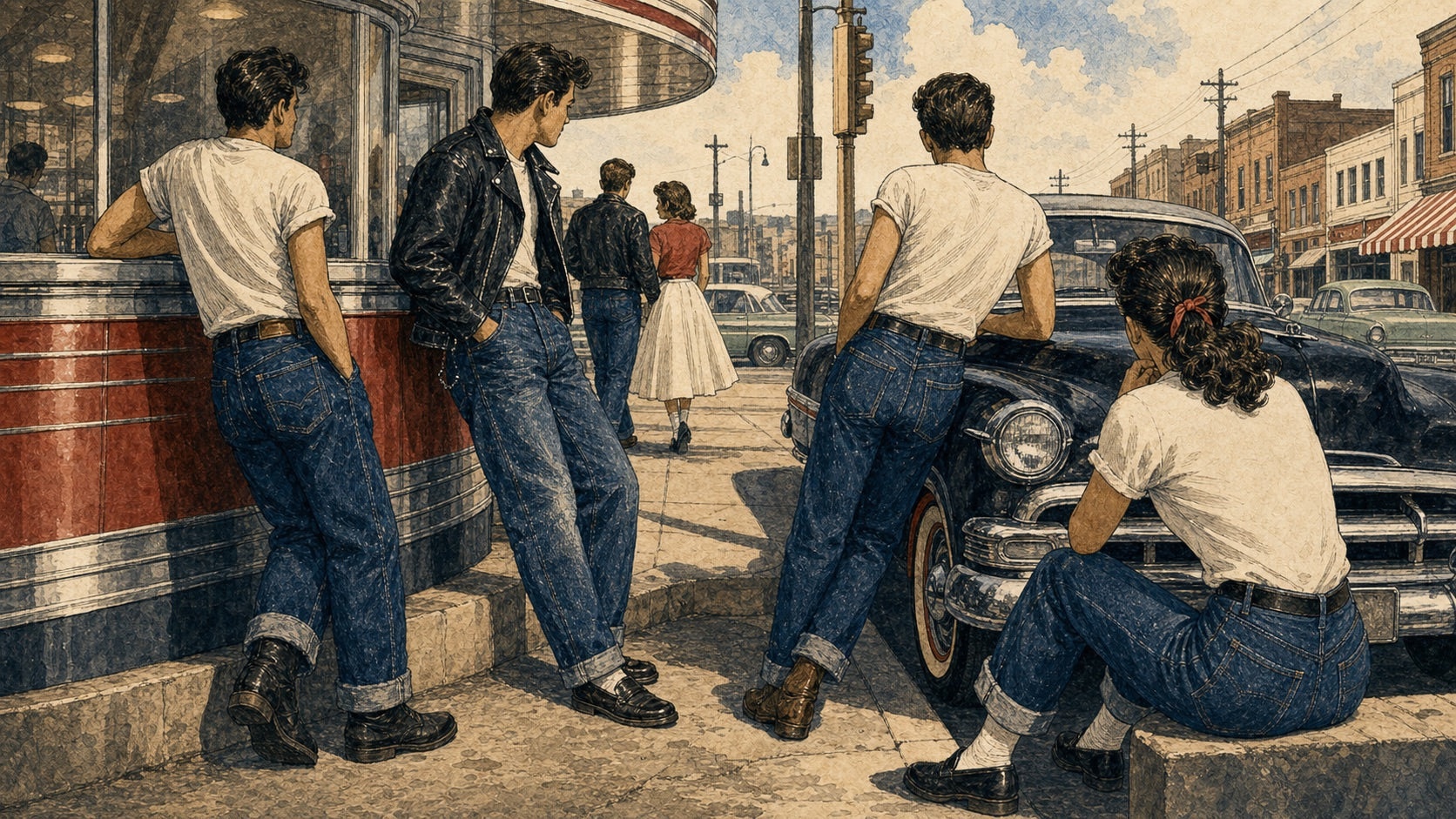
1950年代、ジーンズは若者文化と強く結びつきます。映画の中で、James Dean や Marlon Brando の時代のスタイルが印象づけたのは、白Tシャツ、レザージャケット、ロールアップしたストレートジーンズという、シンプルで少し反抗的な着こなしでした。
In the 1950s, jeans became strongly connected to youth culture. The James Dean and Marlon Brando era made the combination of white T-shirts, leather jackets, and cuffed straight jeans feel simple, sharp, and rebellious.
それまで労働着だったジーンズが、学校、映画館、街角で「若者らしさ」を表す服になっていきます。現代でも、白Tシャツと濃色ストレートジーンズの組み合わせが古びないのは、この時代のイメージが強いからかもしれません。
Jeans moved from work sites to schools, cinemas, and city streets as a sign of youth identity. The timeless appeal of a white T-shirt with dark straight jeans still carries the memory of this decade.
1960s: ヒッピー、音楽、カスタムされたデニム
1960s: Hippies, Music, and Customized Denim
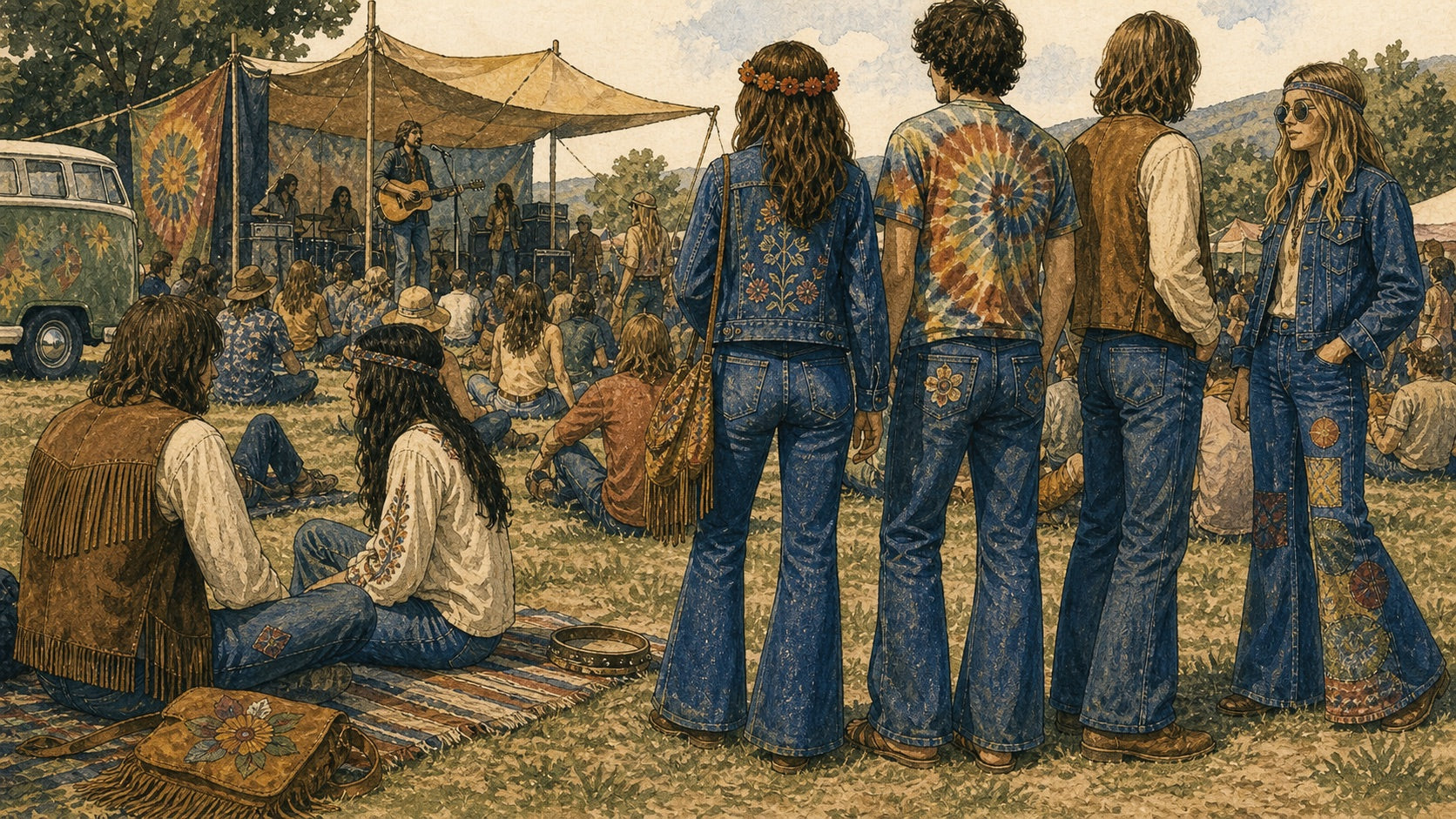
1960年代のデニムは、より自由で個人的な表現へ向かいます。ヒッピーやカウンターカルチャーの中で、ジーンズには刺繍、ワッペン、手描き、パッチワーク、フリンジなどが加えられました。
In the 1960s, denim became more personal and expressive. In hippie and counterculture circles, jeans were decorated with embroidery, patches, hand painting, patchwork, and fringe.
「同じものを大量に着る」よりも、「自分で手を入れて、自分だけの一本にする」感覚が強くなった時代です。これは現代のカスタムジーンズや、リペアしながら長く穿く文化にもつながっています。
This decade valued making a pair your own rather than wearing the same thing as everyone else. That spirit connects directly to modern custom jeans, repairs, and long-term denim wear.
Late 1960s-1970s: スキンズのデニムスタイル
Late 1960s-1970s: Skins Style and Denim
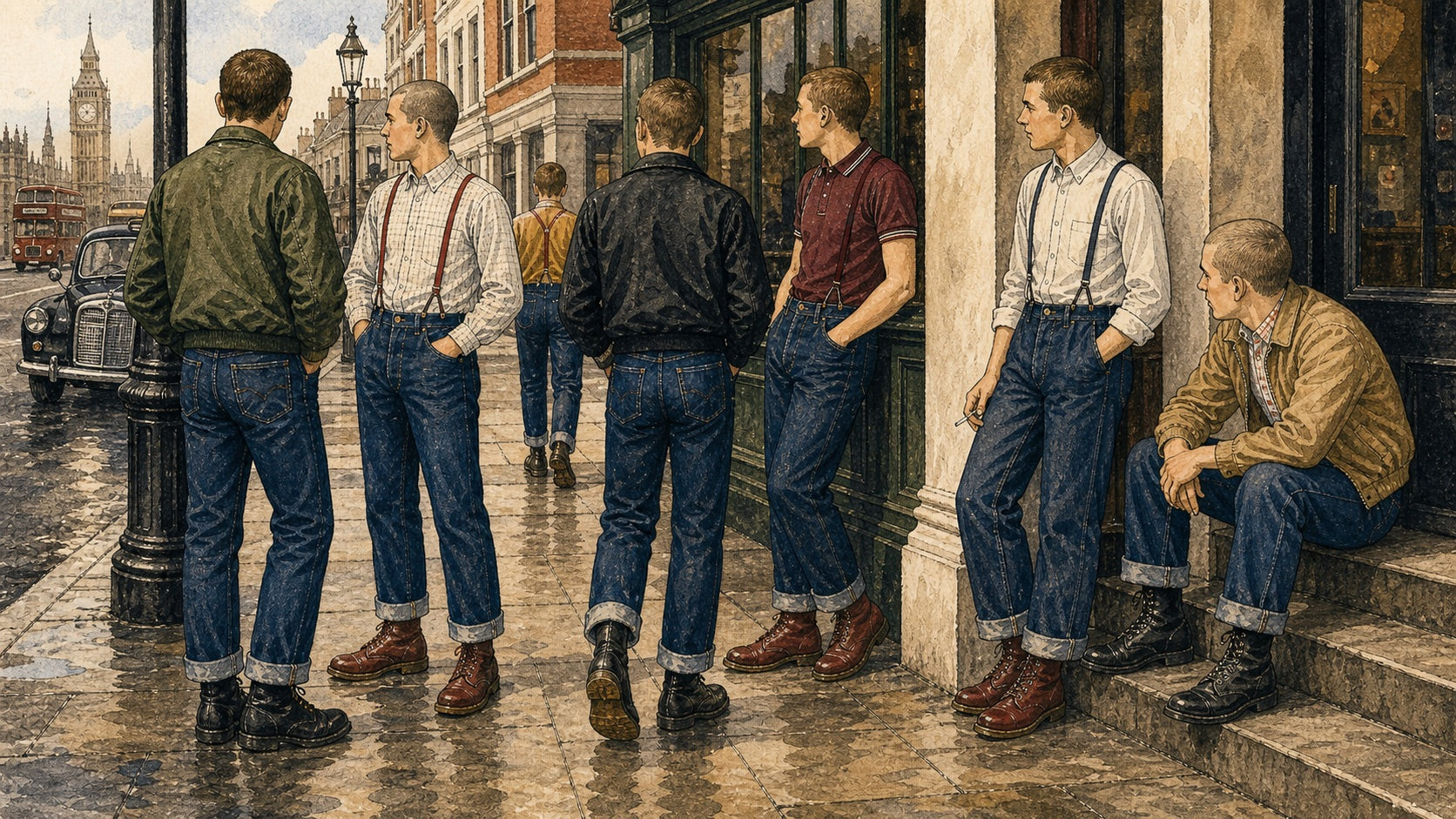
スキンズのファッションも、デニム史の中で外せないスタイルです。1960年代後半のイギリスの若者文化として語られることが多く、細身のストレートジーンズ、短めにロールアップした裾、ブーツ、ブレイシズ、ボタンダウンシャツ、ハリントンジャケットなどが代表的です。
Skins style is also important in denim fashion history. Often discussed as a British youth subculture from the late 1960s, it is associated with slim straight jeans, short rolled cuffs, boots, braces, button-down shirts, and Harrington-style jackets.
ここで紹介しているのは、政治的な意味ではなく、あくまで服装史としてのスキンズスタイルです。作業着由来のジーンズ、ワークブーツ、きちんとしたシャツを合わせることで、粗さと清潔感が同居する独特のバランスが生まれました。
Here, we are discussing skins style as fashion history, not politics. The mix of workwear jeans, boots, and neat shirts created a distinctive balance of toughness and sharpness.
1970s: フレア、ベルボトム、デニムオンデニム
1970s: Flares, Bell-Bottoms, and Denim-on-Denim
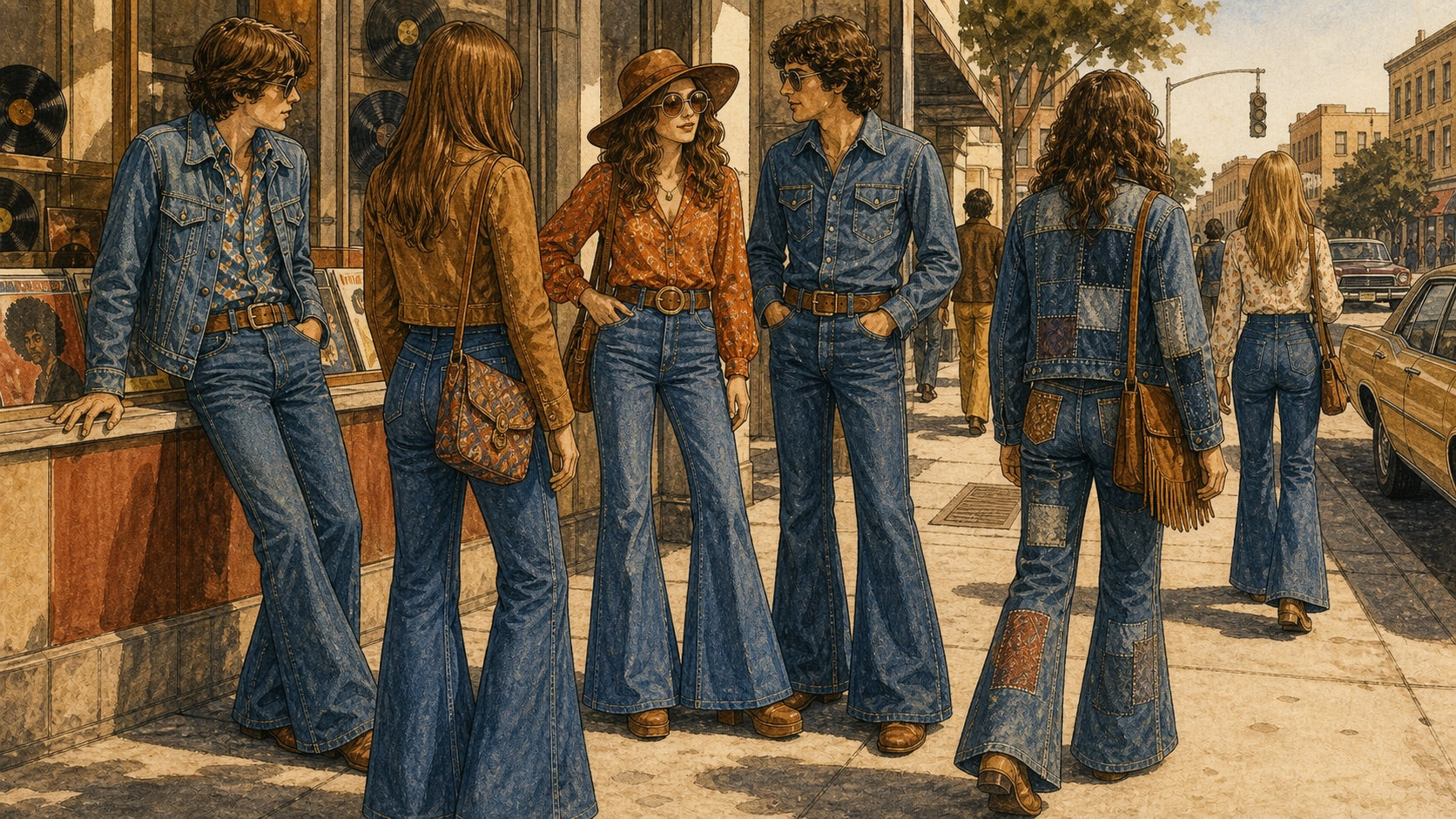
1970年代は、ベルボトムやフレアジーンズが象徴的です。腰まわりはフィットし、膝下から裾にかけて広がるシルエットは、音楽、ダンス、ヒッピー文化、ディスコ文化と相性がよく、歩いた時の動きも印象的でした。
The 1970s are strongly associated with bell-bottom and flared jeans. Fitted through the hips and widening below the knee, the silhouette worked well with music, dance, hippie culture, and disco.
デニムジャケットとジーンズを合わせるデニムオンデニムも、この時代から強く印象に残る着こなしです。上下を同じ色にするだけでなく、濃淡を変えたり、シャツやベストを重ねたりするスタイルも広がりました。
Denim-on-denim also became memorable in this era. People matched denim jackets and jeans, mixed different shades, and layered shirts or vests to create a full denim look.
1980s: デザイナージーンズとケミカルウォッシュ
1980s: Designer Jeans and Acid Wash
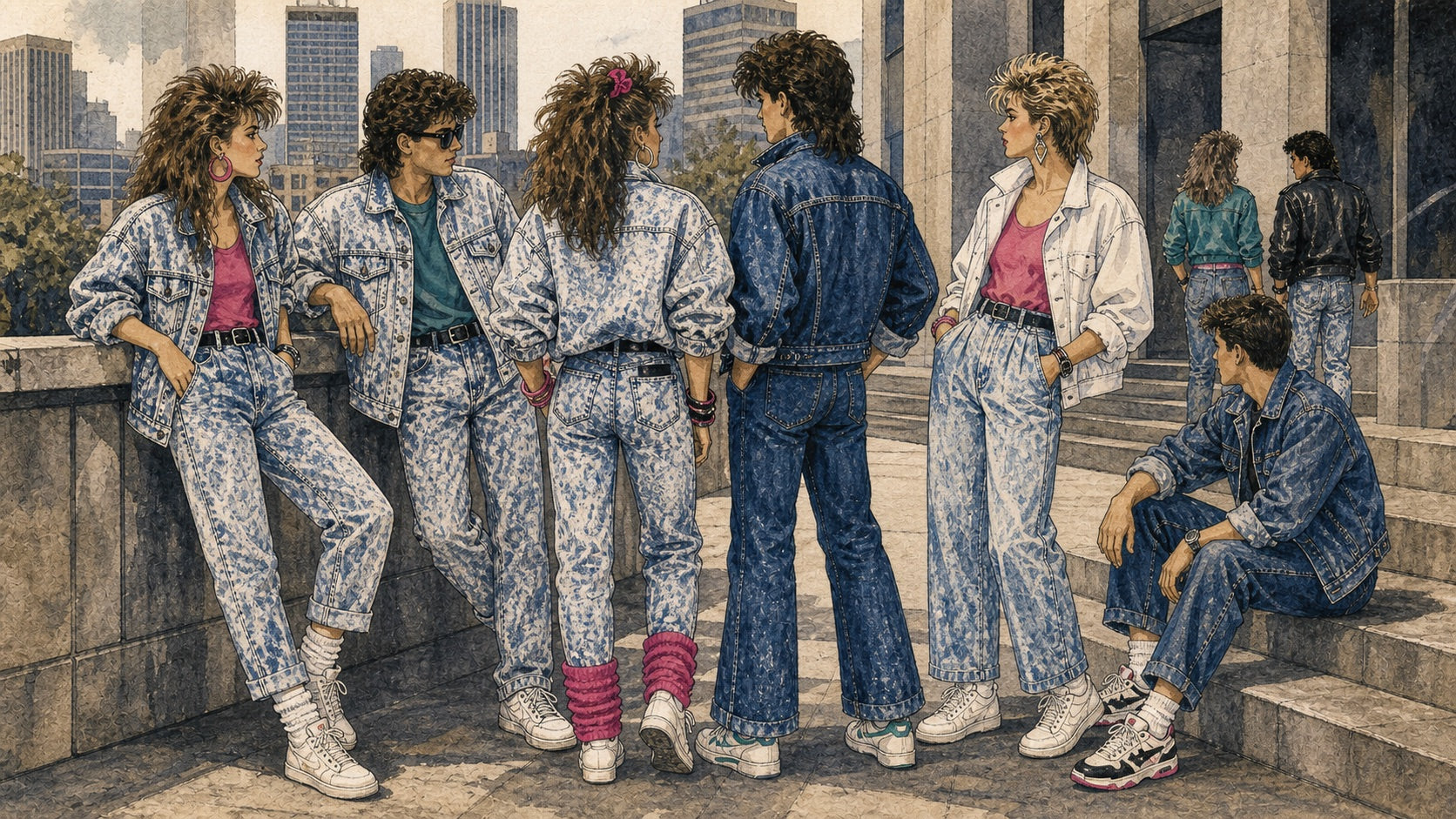
1980年代になると、ジーンズは「ブランドを見せる服」としても強くなります。デザイナージーンズ、広告キャンペーン、タイトなシルエット、ハイウエスト、ケミカルウォッシュ、オーバーサイズのデニムジャケットなど、視覚的に強いデニムが増えました。
In the 1980s, jeans became more connected to brands and advertising. Designer jeans, campaigns, tight silhouettes, high waists, acid wash, and oversized denim jackets made denim more visually bold.
Brooke Shields の Calvin Klein 広告のように、ジーンズはテレビや雑誌の中で強いファッションアイコンになりました。作業着だったジーンズが、ブランド、体型、時代の空気を映すメディアになったとも言えます。
Campaigns such as Brooke Shields for Calvin Klein helped turn jeans into powerful fashion icons in magazines and television. Jeans were no longer only workwear; they became a medium for brand image, body shape, and the mood of the decade.
1990s: グランジ、ヒップホップ、バギージーンズ
1990s: Grunge, Hip-Hop, and Baggy Jeans
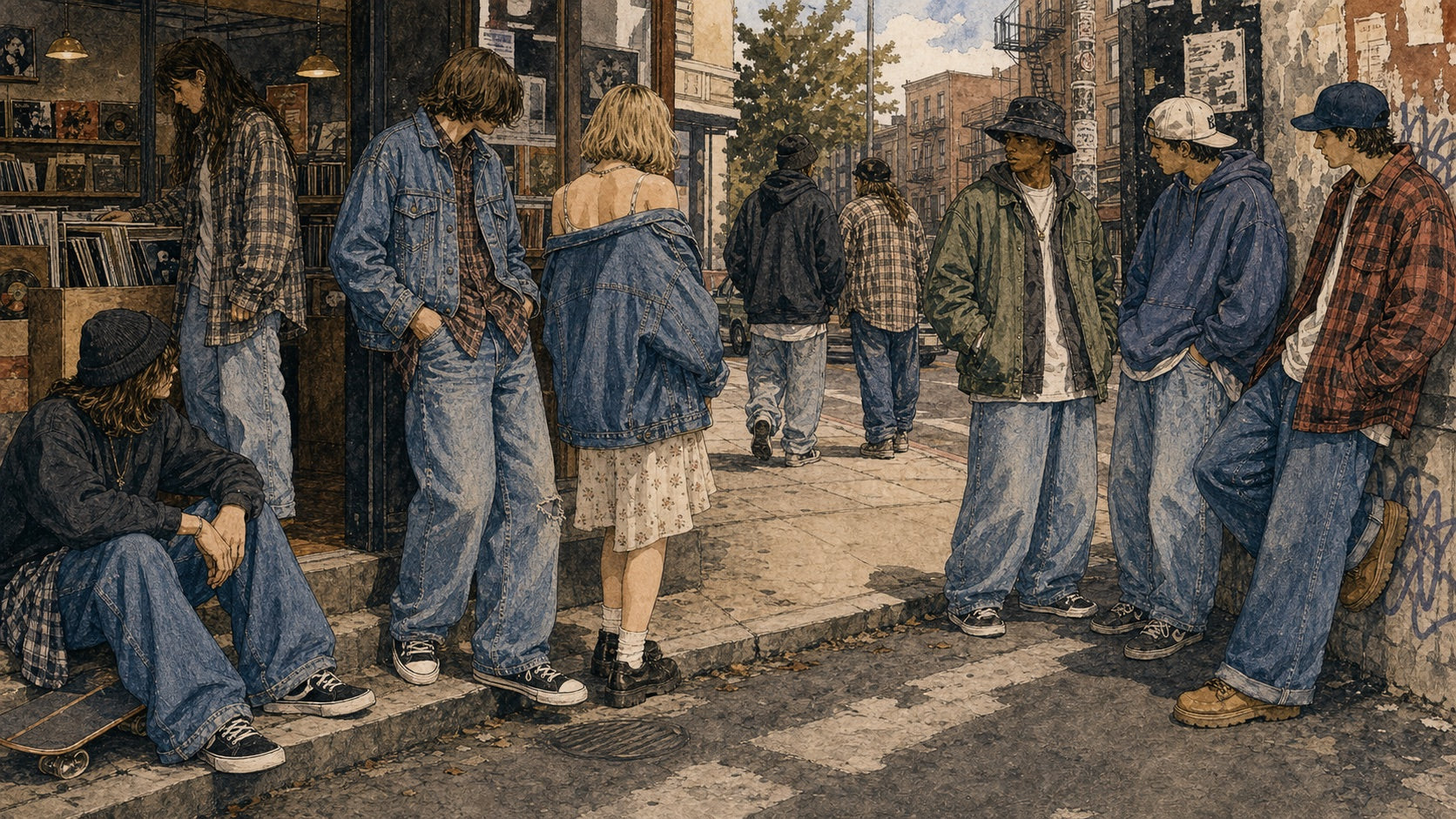
1990年代は、細く整えるよりも、ゆるさ、古着感、リアルな街の空気が大切になりました。グランジでは色落ちしたジーンズ、ネルシャツ、古着、スニーカー。ヒップホップやスケートでは、太めのバギージーンズ、低めのウエスト、オーバーサイズのトップスが広がります。
In the 1990s, looseness, vintage texture, and street realism became important. Grunge favored faded jeans, flannel shirts, thrifted clothing, and sneakers. Hip-hop and skate style pushed baggy jeans, lower waists, and oversized tops.
Kurt Cobain のグランジ的な着こなしや、TLC、Aaliyah などのR&B/ヒップホップ周辺のスタイルは、ジーンズをもっとラフで音楽的な服に見せました。デニムは「きれいに穿く」だけでなく、「崩して穿く」時代に入ります。
Grunge styling associated with Kurt Cobain and R&B/hip-hop styling around artists such as TLC and Aaliyah helped make jeans feel relaxed, musical, and street-based. Denim entered an era of wearing it loose and imperfect.
2000s: ローライズ、ブーツカット、Y2Kデニム
2000s: Low-Rise, Bootcut, and Y2K Denim
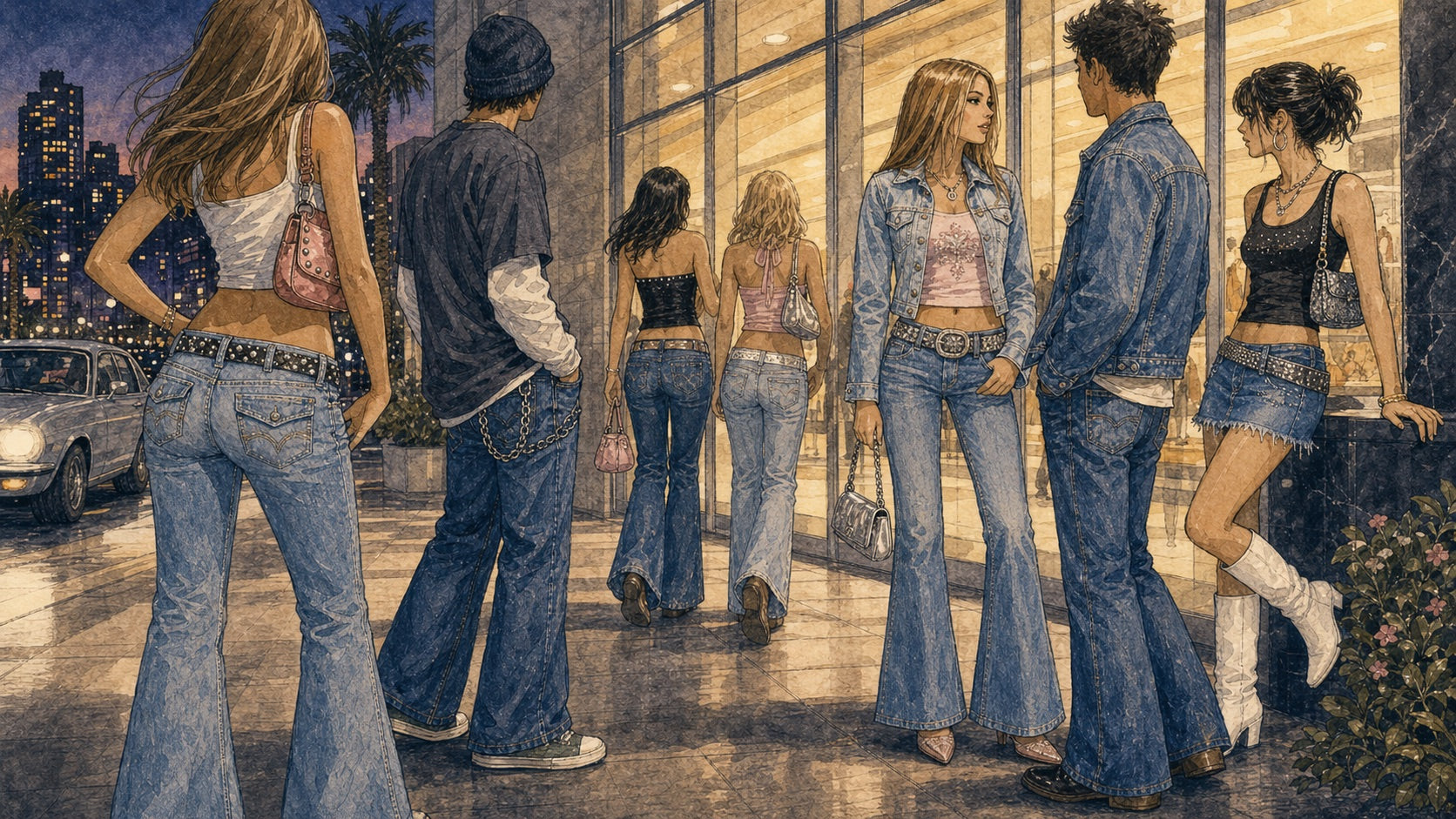
2000年代前半は、ローライズジーンズ、ブーツカット、デニムスカート、ラインストーン、派手なベルト、短いトップスなど、Y2Kらしいデニムスタイルが目立ちました。Britney Spears、Paris Hilton、Destiny's Child などのポップカルチャーのイメージも、この時代のデニムを象徴しています。
The early 2000s were defined by low-rise jeans, bootcut silhouettes, denim skirts, rhinestones, statement belts, and cropped tops. Pop culture images around Britney Spears, Paris Hilton, and Destiny's Child also shaped Y2K denim style.
今見ると少し大胆な着こなしも多いですが、2020年代以降のY2Kリバイバルで、ローライズやブーツカットは再び注目されています。デニムの流行は、何度も形を変えて戻ってきます。
Some looks may feel bold today, but the Y2K revival has brought low-rise and bootcut jeans back into fashion. Denim trends often return in new forms.
2010s: スキニーとローデニムの二つの流れ
2010s: Skinny Jeans and Raw Denim
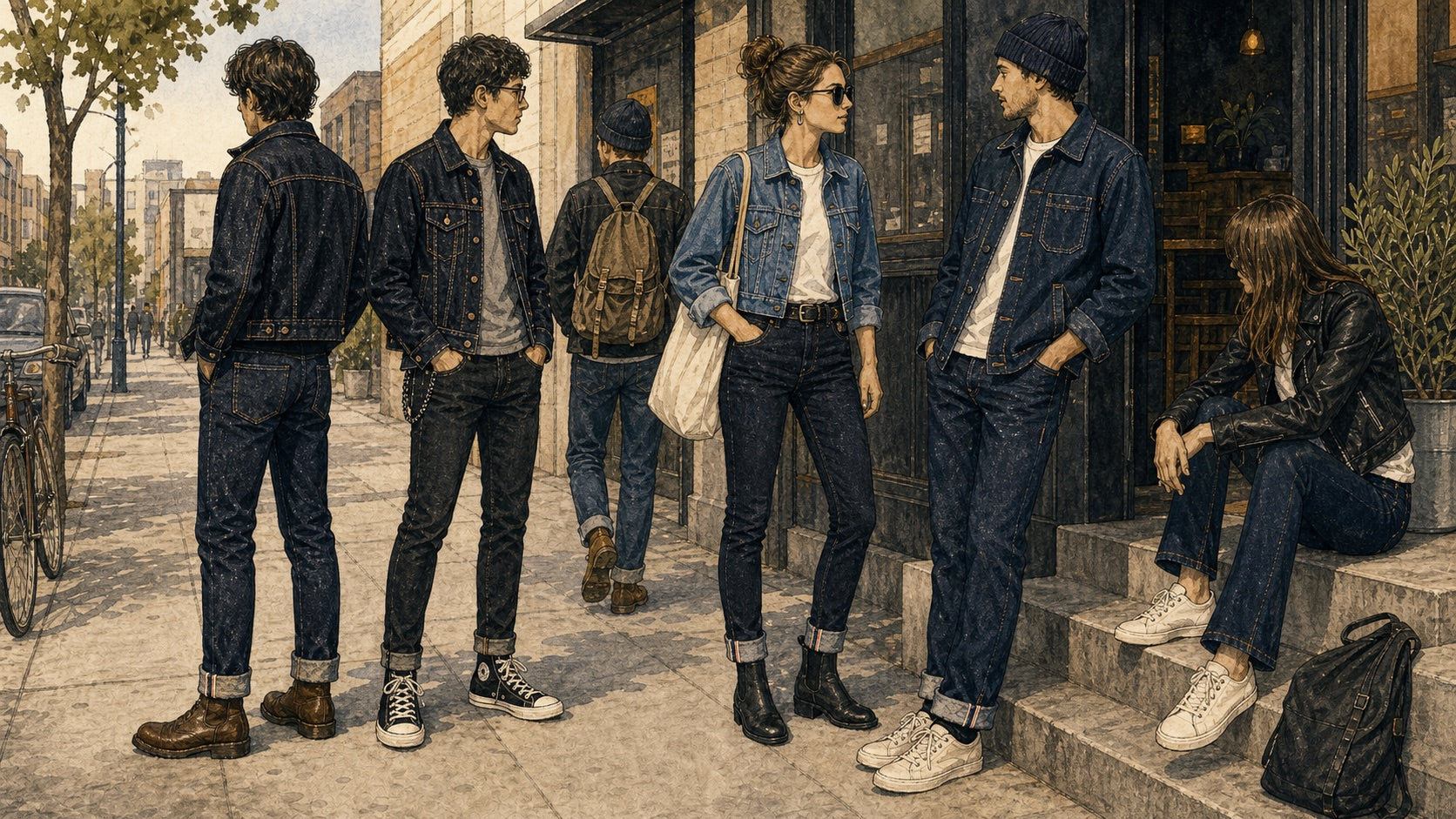
2010年代は、スキニージーンズが世界的に広がった時代です。細いシルエット、ストレッチ素材、シンプルなトップス、ブーツやスニーカーとの組み合わせが、男女問わず日常の定番になりました。
The 2010s saw skinny jeans become a global everyday staple. Slim silhouettes, stretch fabrics, simple tops, boots, and sneakers were worn across genders and styles.
一方で、ローデニム、セルビッチ、ヴィンテージレプリカ、ワークブーツ、革小物を合わせるヘリテージ系の流れも強くなります。ジーンズを「買って終わり」ではなく、色落ちを育てる服として楽しむ人が増えました。
At the same time, raw denim, selvedge, vintage reproductions, work boots, and leather goods became important in heritage menswear. More people began to enjoy jeans as clothing that fades and ages with wear.
2020s: ワイド、リラックス、長く穿くデニムへ
2020s: Wide, Relaxed, and Long-Life Denim
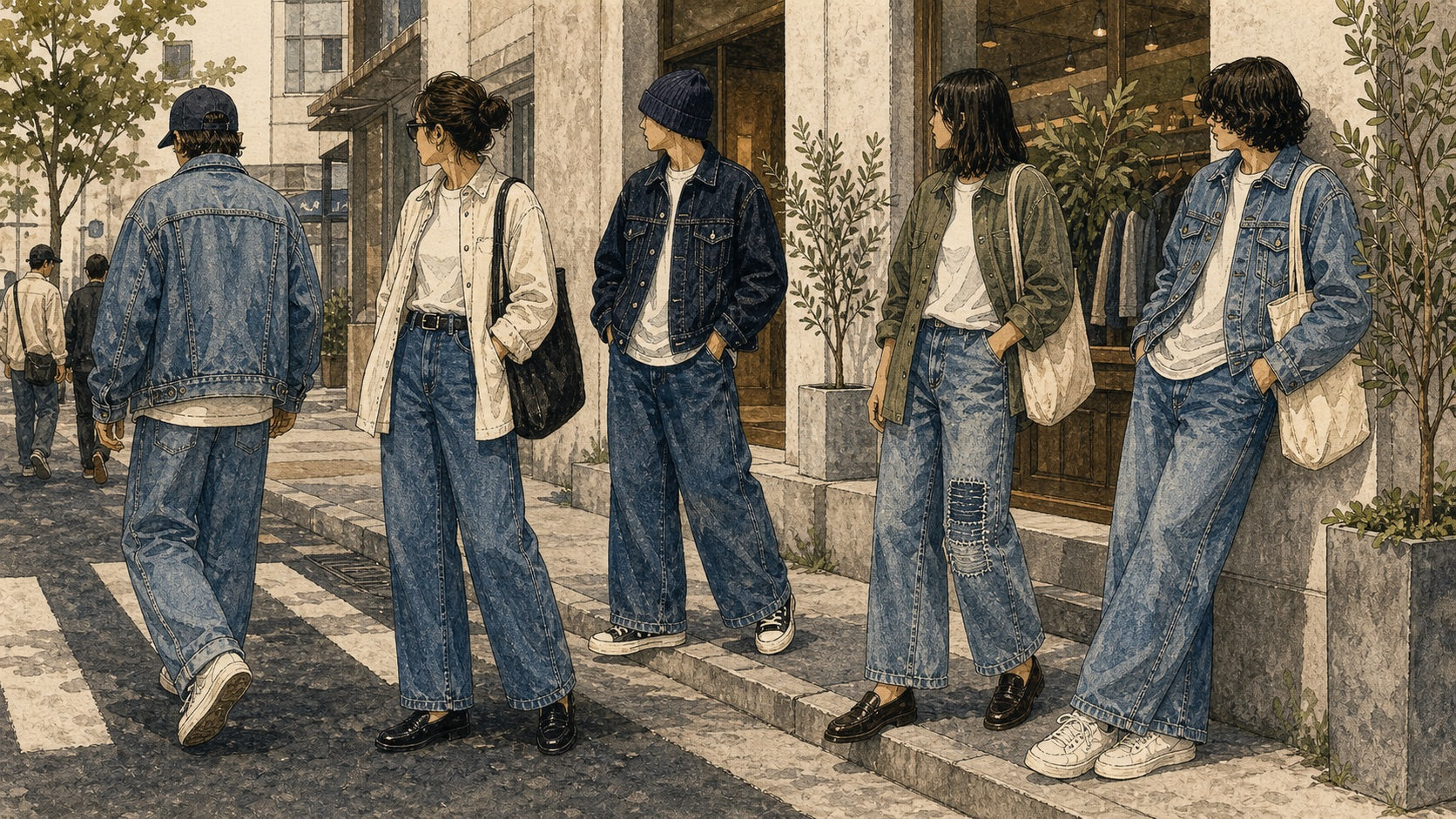
2020年代は、スキニー一択ではなく、ワイド、ストレート、バギー、カーブ、リラックスフィットなど、シルエットの選択肢が広がっています。古着やヴィンテージウォッシュ、リペア、アップサイクル、ジェンダーレスな着こなしも自然になりました。
In the 2020s, denim is no longer dominated by one silhouette. Wide, straight, baggy, curved, and relaxed fits are all popular. Vintage washes, repair, upcycling, and gender-neutral styling feel natural.
そしてもう一つ大きいのが、長く使う価値観です。大量消費よりも、気に入った一本を直しながら穿く。サイズやディテールを選び、自分に合う一本を作る。セミオーダージーンズは、まさに今の時代に合ったデニムの楽しみ方です。
Another major shift is the value of long-term use. Instead of consuming many pairs quickly, more people want one pair they can repair and wear for years. Choosing size and details through semi-custom jeans fits this modern denim mindset.
日本のデニムブーム
The Japanese Denim Boom
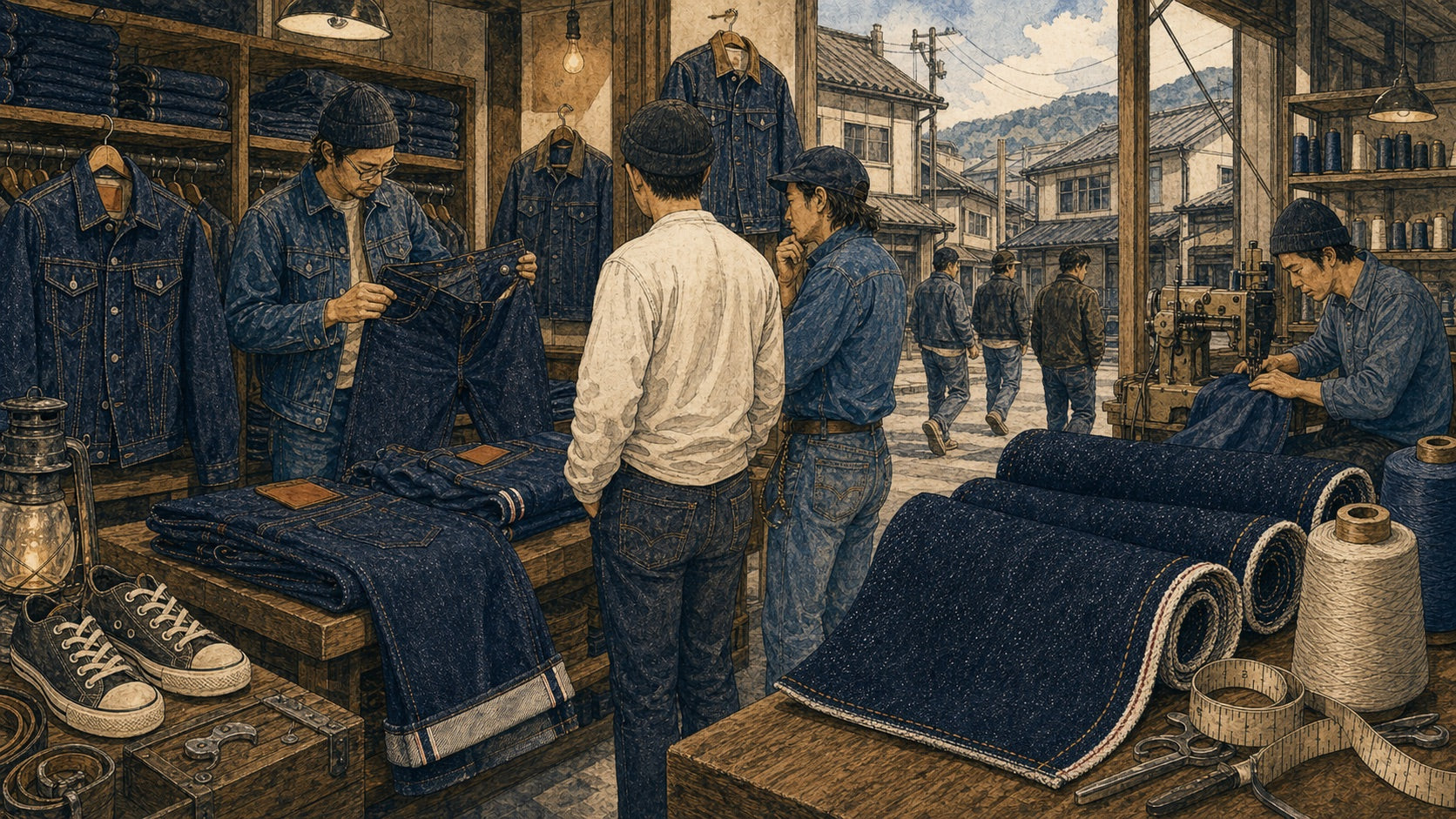
日本のデニムブームを語る時、岡山県児島を中心とした国産ジーンズの歴史は欠かせません。戦後のアメリカンカジュアルへの憧れ、縫製産業の土台、学生服や作業服の生産背景、そして国産ジーンズ作りへの挑戦が、日本製デニムの発展につながりました。
The Japanese denim boom cannot be explained without Kojima in Okayama and the history of domestic jeans production. Postwar admiration for American casual style, local sewing industries, school uniform and workwear production, and the challenge of making Japanese jeans all shaped the rise of Japanese denim.
1980年代から1990年代には、古着、アメカジ、ヴィンテージ Levi's への関心が高まり、セルビッチ、旧式織機、濃いインディゴ、自然な色落ちへの価値観が広がりました。大阪、岡山、児島周辺のブランドや職人の仕事は、海外のデニム好きからも注目されるようになります。
From the 1980s into the 1990s, interest in vintage clothing, American casual style, and old Levi's jeans grew in Japan. Selvedge denim, shuttle looms, deep indigo, and natural fades became highly valued. Brands and makers around Osaka, Okayama, and Kojima later gained attention from denim fans overseas.
2000年代以降は、raw denim、selvedge denim、Japanese denim という言葉が海外でも検索されるようになり、日本製デニムは「高品質で、穿き込むほどに育つデニム」として認識されていきました。
From the 2000s onward, terms such as raw denim, selvedge denim, and Japanese denim became widely searched internationally. Japanese denim became known as high-quality denim that develops character through wear.
デニムの流行は変わります。でも、長く穿ける一本を大切にする気持ちは、どの時代にも残ります。
Denim trends change, but the wish to keep one meaningful pair for a long time remains across generations.
今、自分の一本を作るという選択
Today: Choosing a Pair Made for You
TSUJIMOTO DENIM FACTORY では、秋田県能代市のデニム縫製工場で、日本製セミオーダージーンズを製作しています。時代ごとのデニムスタイルを知ると、自分がどんな一本を長く穿きたいのかも見えてきます。
TSUJIMOTO DENIM FACTORY makes made in Japan semi-custom jeans at a denim sewing factory in Noshiro, Akita. When you understand denim fashion by decade, it becomes easier to choose the pair you want to wear for years.
1950年代のようにシンプルに穿くのか、1990年代のようにゆるく穿くのか、2020年代らしくワイドに穿くのか。サイズ、紙パッチ、タブ、ボタン、リベットなどを選びながら、自分の好きなデニムの時代を一本に入れることもできます。
You might prefer a clean 1950s-inspired look, a relaxed 1990s feel, or a modern wide silhouette. By choosing size, leather patch, tab, buttons, and rivets, you can build a pair that reflects your favorite denim era.
よくある質問
FAQ
Q. ジーンズがファッションとして広がったのはいつですか?
作業着としては19世紀後半から広がり、1950年代以降に映画や若者文化を通してファッションとして強く認識されるようになりました。
Q. When did jeans become fashion?
Jeans spread as workwear in the late 19th century, then became strongly recognized as fashion through cinema and youth culture from the 1950s onward.
Q. スキンズのデニムスタイルとは何ですか?
1960年代後半のイギリスの若者文化として語られるスタイルで、細身ストレートジーンズ、ロールアップ、ブーツ、ブレイシズ、ボタンダウンシャツなどが代表的です。
Q. What is skins style in denim fashion?
It is often discussed as a late-1960s British youth style, associated with slim straight jeans, rolled cuffs, boots, braces, and button-down shirts.
Q. 日本製デニムはなぜ海外で人気ですか?
セルビッチ、旧式織機、深いインディゴ、丁寧な縫製、自然な色落ち、ヴィンテージ研究へのこだわりなどが評価されています。
Q. Why is Japanese denim popular overseas?
Japanese denim is valued for selvedge fabric, shuttle looms, deep indigo, careful sewing, natural fading, and a strong respect for vintage denim.
Q. 2020年代に人気のジーンズは何ですか?
ワイド、ストレート、リラックスフィット、バギー、ヴィンテージウォッシュ、リペアデニムなど、体型や好みに合わせて選べるスタイルが人気です。
Q. What jeans are popular in the 2020s?
Wide-leg jeans, straight jeans, relaxed fits, baggy jeans, vintage washes, and repaired denim are popular because people can choose what suits their body and taste.
References / 参考リンク
- Google Patents — US139121A Improvement in fastening pocket-openings
- Britannica — Jeans
- Britannica — Denim
- Levi Strauss & Co. — The Denim Dictionary
- Encyclopedia.com — English Skinheads
- Heddels — Why Okayama Became Japan's Denim Capital
- Nippon.com — Japanese Jeans Turn Sixty: Visiting Okayama's Denim Capital, Kojima
- AP News — Japan's Kojima, with its proud Jeans Street, draws fans of vintage, deep-blue denim
